Survey Notes 46-3

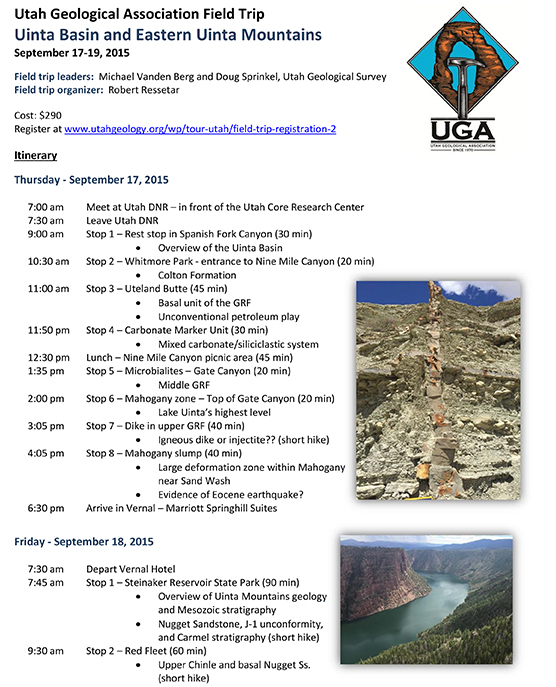
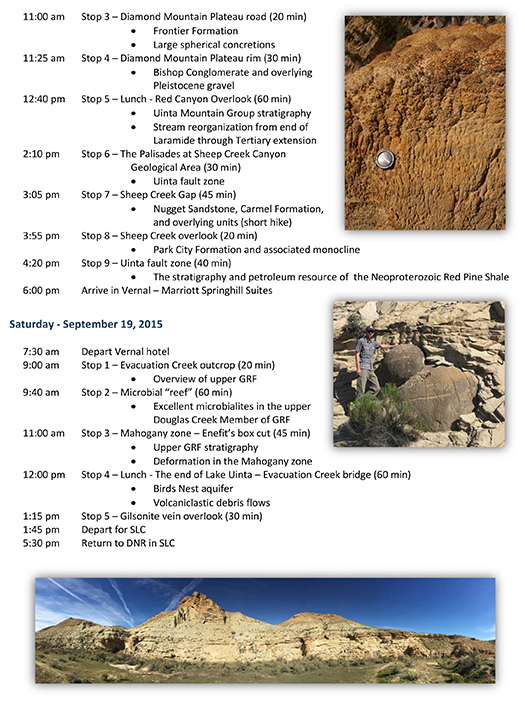
The annual UGA Field Trip registration is open, and we would love to have you join us! This year Michael Vanden Berg and Doug Sprinkel will guide us through the spectacular geology of the Uinta Basin and the Eastern Uinta Mountains. See the itinerary pictured below. Interested but have some questions? Send them our way!

Utah Geological Association Field Trip
Uinta Basin and Eastern Uinta Mountains
September 17‐19, 2015

Field trip leaders: Michael Vanden Berg and Doug Sprinkel, Utah Geological Survey
Field trip organizer: Robert Ressetar

Cost: $290

Register HERE

UGA itinerary 1 UGA itinerary 2

Earlier we posted how the unsafe conditions at the Bonneville Salt Flats cancelled Speed Week. Now a team of scientists and students from the University of Utah have been hired in an effort to research the reasoning for these changes at the Salt Flats.

good4utah.com

A team of scientists and students from the University of Utah are looking have begun their research into changes at the Bonneville Salt Flats.

READ MORE

sltrib.com

Researchers sifting through deposits of owl pellets in Utah’s Homestead Cave have discovered that small-mammal communities scurrying around the West Desert remained stable through millennia of climate change.

READ MORE

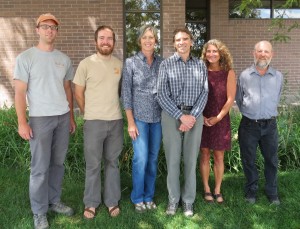
The prestigious 2015 Crawford Award was presented to UGS geologists Hugh Hurlow, Stefan Kirby, Lucy Jordan, Paul Inkenbrandt, Janae Wallace, and Mike Lowe in recognition of their combined work on the outstanding geologic publication Hydrogeologic Studies and Groundwater Monitoring in Snake Valley and Adjacent Hydrographic Areas, West-Central Utah and East-Central Nevada (UGS Bulletin 135).

This 294-page book presents hydrogeologic, groundwater-monitoring, and hydrochemical studies in Snake Valley, Tule Valley, and Fish Springs Flat in Millard and Juab Counties, west-central Utah. Collectively, this work delineates groundwater levels, flow, and chemistry in Snake Valley and adjacent basins to a much greater degree than previously possible, and emphasizes the sensitivity of the groundwater system to possible increases in groundwater pumping.

The Crawford Award recognizes outstanding achievement, accomplish­ments, or contributions by a current UGS scientist to the understanding of some aspect of Utah geology or Earth science. The award is named in honor of Arthur L. Crawford, first director of the UGS.
IMG_1426a

2015 Crawford Award recipients Stefan Kirby, Paul Inkenbrandt, Lucy Jordan, Hugh Hurlow, Janae Wallace, and Mike Lowe.

 

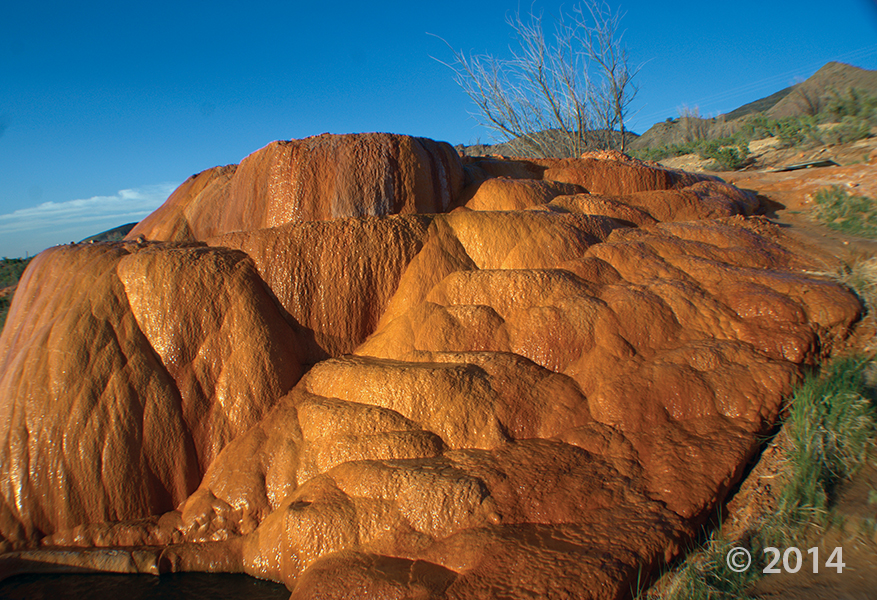
Wet, red mounded rocks.

Happy Friday, friends! Who’s getting out in the big Utah wild this weekend? Mystic Hot Springs is a great destination!

Mystic Hot Springs POTD 7-28-15

Travertine deposit at Mystic Hot Springs, Sevier County, Utah
Photographer: Paul Kuehne; © 2014

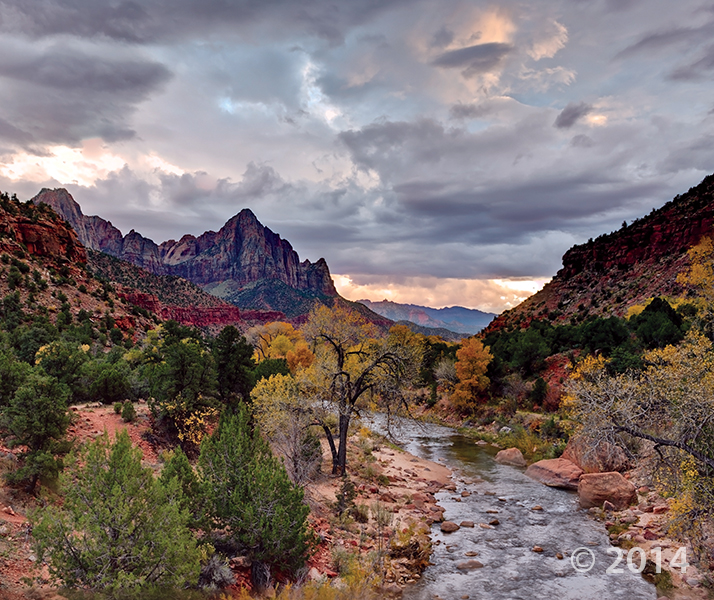
The Watchman (6,545 feet), composed of Jurassic-age Navajo Sandstone, stands guard over the southern entrance to Zion Canyon. The canyon has been carved by the North Fork Virgin River, which has eroded downward thousands of feet through the Navajo and underlying Kayenta and Moenave Formations. Zion National Park, Washington County, Utah Photographer: Gregg Beukelman; © 2014

POTD 4-28-15 Zion Watchman

Zion National Park, Washington County, Utah
Photographer: Gregg Beukelman; © 2014

The Watchman (6,545 feet), composed of Jurassic-age Navajo Sandstone, stands guard over the southern entrance to Zion Canyon. The canyon has been carved by the North Fork Virgin River, which has eroded downward thousands of feet through the Navajo and underlying Kayenta and Moenave Formations.

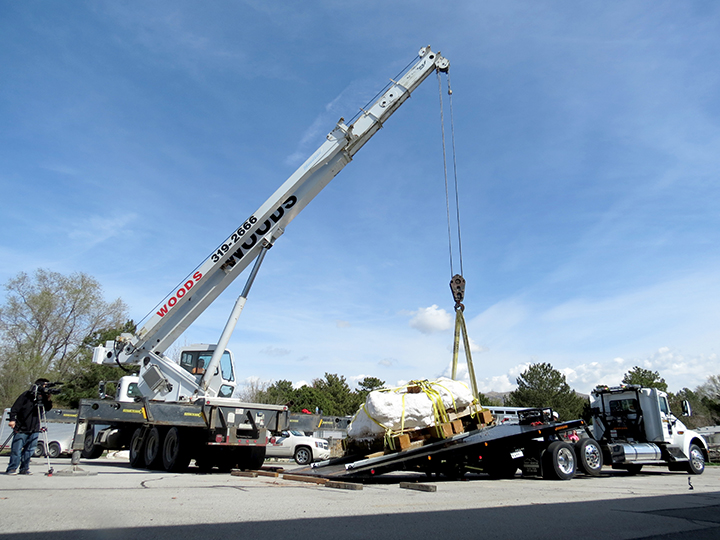
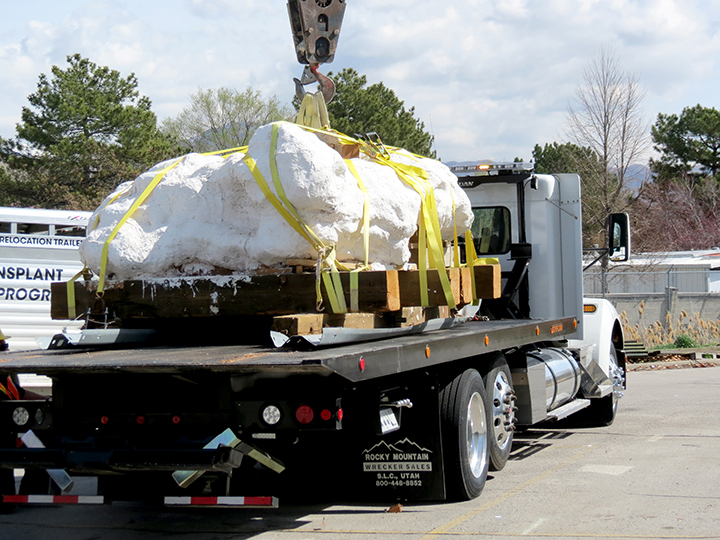
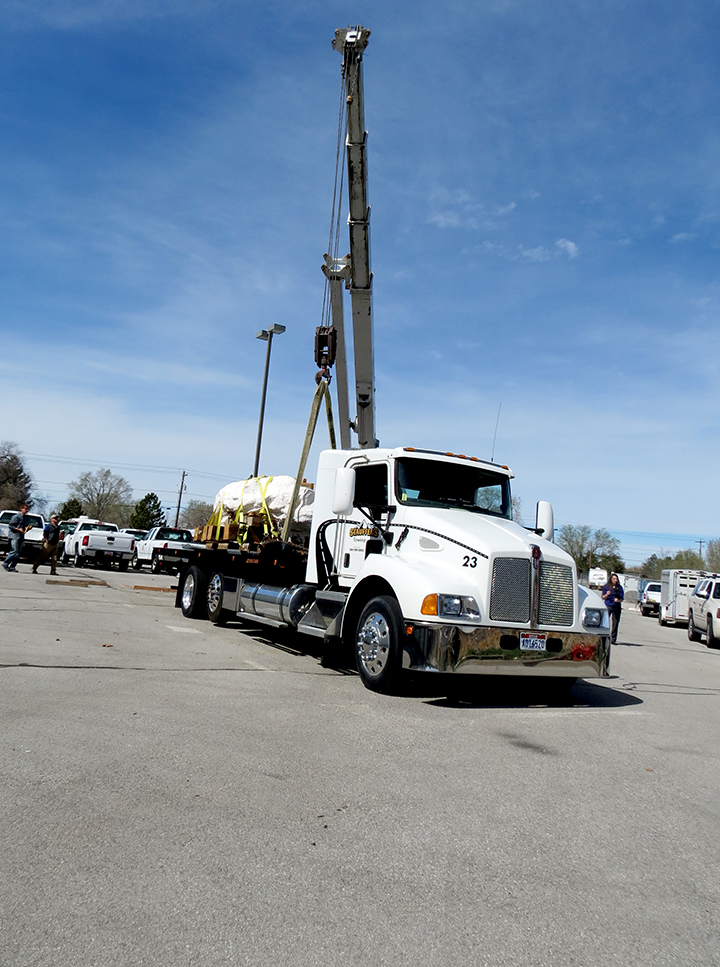
A BIG BIG “Thanks” to Cross Marine Projects of American Fork for helping us move our nearly 9-ton Utahraptor fossil block from our UGS headquarters in Salt Lake City down to Thanksgiving Point’s Museum of Ancient Life in Lehi today.

Stikes Block SLC to Thanksgiving Point 1 Stikes Block SLC to Thanksgiving Point 2 Stikes Block SLC to Thanksgiving Point 3 Stikes Block SLC to Thanksgiving Point 4 Stikes Block SLC to Thanksgiving Point 5

Looking for somewhere fun to go in Utah this weekend? You don’t even have to leave home! Check out our GeoSights virtual tour page to find some of Utah’s coolest places!

VIEW HERE

Last Thursday the Utah Geological Survey participated in Teens in the Woods: Mapping our Future outdoor program, an education initiative designed to bring underserved, urban, and diverse children and adolescents to the forests to spark curiosity, exercise, and connect the next generation with nature. The week-long event is chock-full of activities set up by scientists from many fields in the Earth sciences, emphasizing conservation, stewardship, science, technology, engineering, and mathematics. On our trip with high school and middle school students we traveled to Big Cottonwood Canyon and Silver Lake to explore geology, forestry, air photo interpretation, and aquatic biology.

Teens in the Woods is a new nation-wide program spearheaded by the U.S. Department of Agriculture/U.S. Forest Service and in the Uinta-Wasatch-Cache National Forest, partnered with some dozen other organizations including the Cottonwood Canyons Foundation and Bad Dog Art.

Ms. Amy discusses water chemistry and lake health with students in the rain.

A student examines a leech and other aquatic invertebrates that inhabit Silver Lake.

A young bull moose examines the students at Silver Lake.

kcsg.com

Residents living within high rock-fall-hazard zones in Rockville, Utah, face the possible consequences of a large rock fall similar to the fatal event that occurred last December. That is the principle finding of a geologic investigation into the rock fall that killed two people on December 12, 2013. That afternoon, a huge, joint-controlled rock mass, with an estimated volume of almost 1,400 cubic yards and weighing about 2,700 tons, detached from the cliff face at the top of the Rockville Bench, near Zion National Park. The rock mass fell onto the steep slope below the cliff, and shattered into numerous fragments. The rock fall debris then moved rapidly downslope before striking and destroying a house, detached garage, and a car. The largest boulder to strike the house weighed an estimated 520 tons.

READ MORE