


Pozzolan – Ancient Technology, Future Resource
by Andrew Rupke and Taylor Boden

The Colosseum, which utilized pozzolanic materials in its concrete, still stands today, nearly 2,000 years after construction.
Concrete is everywhere. It holds our buildings up and is in many of our roads and the sidewalk you strolled down this morning. Two main ingredients make up concrete: aggregate (composed of sand and gravel) and cement, the glue that holds it all together. Aggregate is relatively cheap to mine and produce. But the production of cement is an expensive and energy intensive process in which a variety of rocks and minerals containing calcium, aluminum, silica, and iron are heated up to high temperatures (+1400°C [+2550°F]) in a kiln to combine those elements into compounds that are reactive when water is added. This process also generates significant carbon emissions from fuel combustion used to heat the kiln, as well as the direct release of carbon dioxide from limestone, the source of calcium oxide in cement. Because cement is so widely used, its production is estimated to account for around 8% of global carbon dioxide emissions. Given these facts, are there ways to reduce the cost, energy use, and emissions related to cement production? Yes, and one way to make reductions is by using pozzolan, a siliceous or siliceous/aluminous material. The use of pozzolan dates back thousands of years and was widely used in the Roman Empire. The word pozzolan comes from the town of Pozzuoli, Italy, where volcanic tuffs and tephras were mined for use in Roman concrete. The Romans’ use of pozzolanic materials is why their concrete has endured through the millennia (e.g., the Colosseum in Rome).
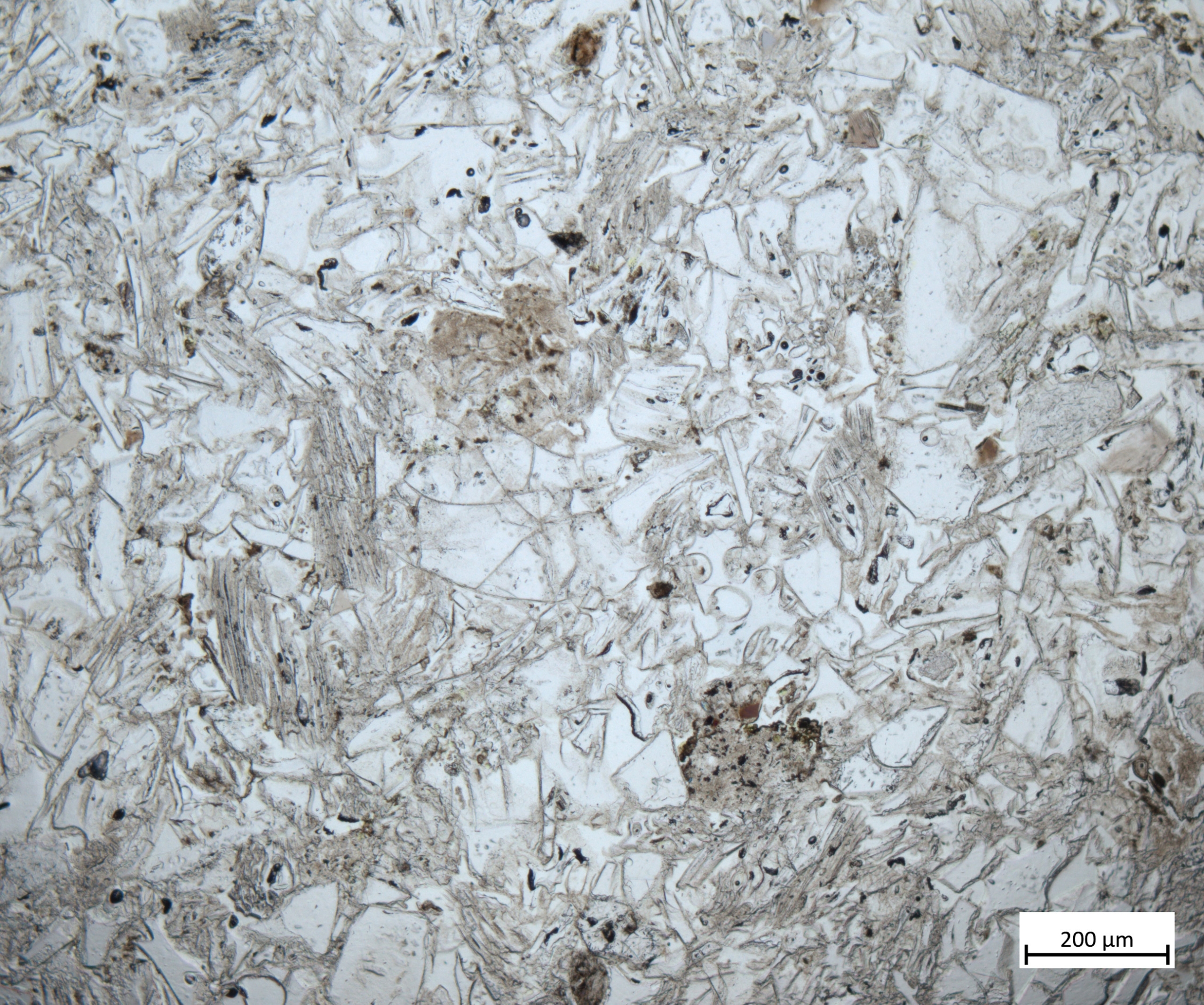
This photomicrograph is of a tephra, a weakly consolidated volcanic deposit, in northwest Box Elder County. Most of the grains in the image are glassy ash-size shards. Glass can be reactive and might give the deposit “pozzolanic” properties.
Pozzolans are materials that can be added to partially replace the cement in concrete. The chemical and physical properties of pozzolans cause them to be reactive and behave in a “cementitious” way when combined with a concrete mixture. Pozzolans can be both natural and man-made and ideally, they require only limited processing, such as crushing, grinding, and drying. Beyond replacing a portion of the cement, pozzolans often improve the quality of a concrete by making it stronger and more durable. A commonly used man-made pozzolan is fly ash, a byproduct of coal-fired power plants. However, the closing of many coal-fired power plants across the nation has reduced the amount of available fly ash, leading cement producers to look for natural pozzolans.
As their name implies, natural pozzolans are sourced from naturally occurring geologic materials such as certain volcanic rocks, specialized clay, and diatomaceous earth deposits. To be “pozzolanic,” these deposits generally need to contain high amounts of silica or silicate minerals, and to be reactive, they also need to be amorphous or contain zeolite minerals. Amorphous materials in rocks, such as volcanic glass or diatoms, do not have a regular crystal structure. Zeolite minerals commonly form in altered volcanic deposits and are naturally reactive. Utah hosts all these deposit types.
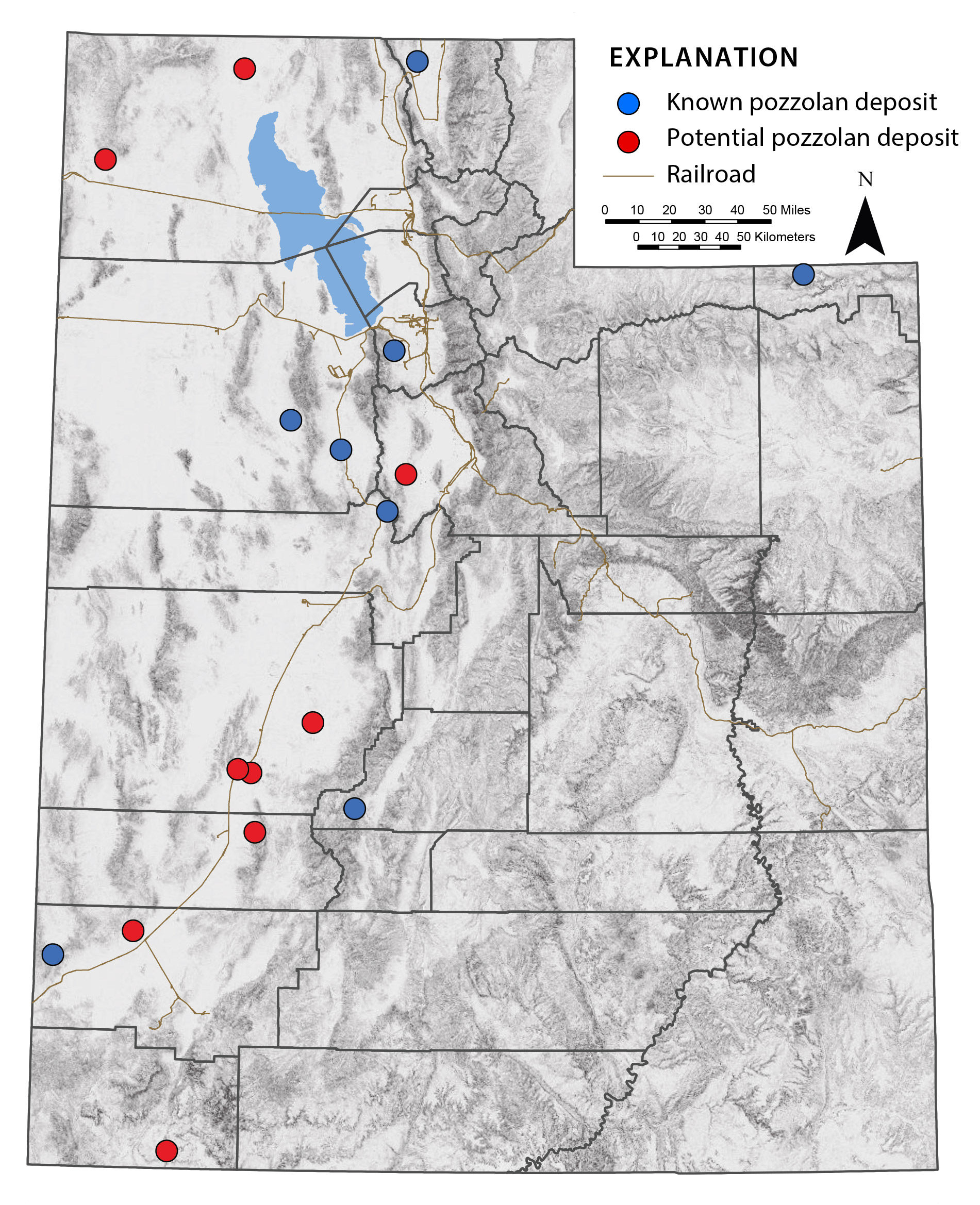
Potential and known pozzolan deposit locations.
In response to increased interest in natural pozzolans, the Utah Trust Lands Administration supported the Utah Geological Survey in a study to identify known pozzolan deposits in the state and investigate potential for undiscovered deposits on their lands. For the study we collaborated with Dr. Marie Jackson from the University of Utah, who has studied Roman concrete. The exploratory part of the study focused on identifying volcanic deposits containing the right chemistry (enough silica, aluminum, and iron) and the presence of reactive materials such as volcanic glass or zeolite minerals. Volcanic deposits were the focus because they tend to require less processing than clay deposits, and, in general, Utah’s diatomaceous earth deposits are not extensive. We prioritized studying potential deposits that were near transportation (rail and major highways) to minimize shipping costs should a deposit be developed.
Several known pozzolan sources are scattered across the state and include volcanic, clay, and diatomite deposits. One of these deposits, a glass-rich volcanic tephra in Rush Valley, is actively being mined by Ash Grove, a cement company operating in central Utah. Another example of a known deposit consists of volcanic ash beds on the west side of the Salt Lake Valley that were evaluated in the 1970s and found to be suitable for pozzolan. In our search for potential new deposits, we collected and analyzed more than 70 rock samples across the state and identified several areas that may deserve additional evaluation. The data and information from this study can be a starting point for companies interested in locating more pozzolan resources in Utah.