
Earthquake Hazards
Utah has experienced 17 earthquakes greater than magnitude (M) 5.5 since pioneer settlement in 1847, and geologic investigations of our region’s faults indicate a long history of repeated large earthquakes of M 6.5 and greater prior to settlement. Seismic activity can often trigger a succession of additional potentially destructive hazards. The seismic-related hazards listed below all possess their own potential for destruction. Some areas of the state are more susceptible than others when it comes to being at risk.



Earthquakes in Utah
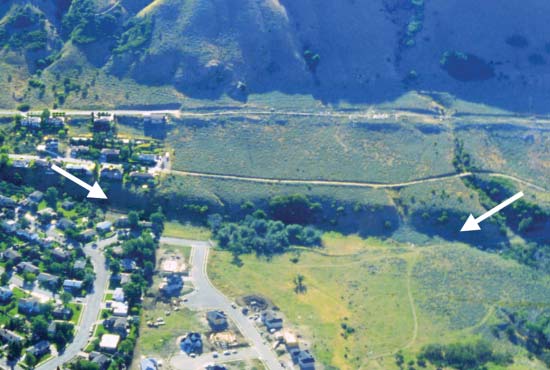
While Utah is not on a boundary between tectonic plates where most of the world’s earthquakes occur, it is in the tectonically extending western part of the North American plate. Thus, earthquakes in Utah are related to interactions with the Pacific plate along the plate margin on the west coast of the United States. Also, many small earthquakes in east-central Utah are induced by underground coal mining.
Earthquake-Related Geologic Hazards:

Utah Earthquakes Virtual Field Trip
Natural History Museum of Utah
Curious about Utah’s recent earthquakes? Learn more about why Utah has earthquakes and the ways past earthquakes have shaped our valley and mountains.
Costs of Earthquake Hazards
Although only two fatalities (ground shaking-related) from earthquakes have occurred in Utah since 1847, scenario modeling predicts 2000 to 2500 fatalities, 7400 to 9300 life-threatening injuries, 55,400 buildings completely damaged, 21 million tons of debris, and $33.2 billion in estimated short-term, direct economic losses from a major M 7.0 earthquake on the Salt Lake City segment of the Wasatch fault zone. Short-term financial losses and long-term economic costs include damages, cleanup, closed businesses, lower productivity and economic output, and other costs. It is projected that 61% of the total number of buildings in the 12 county area in northern Utah will be moderately damaged or totally destroyed. Such an event will likely take decades to recover from and will be the single most costly geologic hazard event to affect Utah.
Related Information:
Geologic Hazards and Insurance – Are You Covered?
Interactive and Additional Resources

Putting Down Roots in Earthquake Country

Utah Geologic Hazards Portal

Utah Earthquakes (1850 to 2016) and Quaternary Faults Map
 Visit the State of Utah interagency earthquake website for Utah-specific preparedness information and the latest earthquake news!