

Radon Gas Hazards
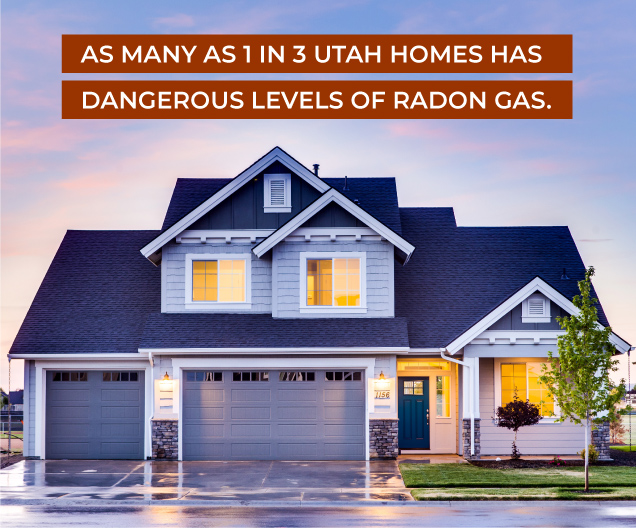 Radon is a radioactive gas that has no smell, taste, or color and exposure over time causes lung cancer. Between 1973 and 2015, there were approximately 5,630 fatalities in Utah attributable to lung cancer caused by radon gas (based on World Health Organization general estimate that 14% of lung cancer cases are attributable to radon gas).
Lung cancer fatalities caused by radon gas are Utah’s most deadly geologic hazard.
Thousands of fatalities before 1973 from radon gas are likely as well. To date, the number of lung cancer fatalities caused by radon gas make radon gas Utah’s most deadly geologic hazard. Geologic conditions directly affect indoor radon gas concentrations; however, indoor radon gas concentrations are highly dependent on building construction methods. Radon comes from the natural decay of uranium which is found in nearly all rock and soil. When geologic and building conditions are favorable, the potential for high indoor levels of radon gas increases.
If Radon is Natural, Why is it a Hazard?

Image of Radon Hazard Potential Map of the Moab Quadrangle, Grand County, Utah. UGS Special Study 162, Plate 6.
Outdoor radon levels rarely reach dangerous concentrations because air movement scatters radon into the atmosphere. However, dangerous outdoor radon levels are often encountered near uranium ore processing waste piles, mine openings, and related operations. Radon is a hazard in buildings because the gas collects in enclosed spaces.
Building conditions that can contribute to high indoor-radon levels:
- Structures built on or near groundwater that contains sufficient uranium.
- Underlying soil that allows easy movement of radon.
- Porous building materials, cracks, and/or other openings below the ground surface that allow radon from soil to enter the building.
- Lower air pressure inside than in the soil around a building foundation.
Radon gas is easily dissolved in water and is released into the air during water use and movement. High levels of radon are not common in Utah’s public-water supplies but may be present in well water.
What are the Health Risks of Radon?
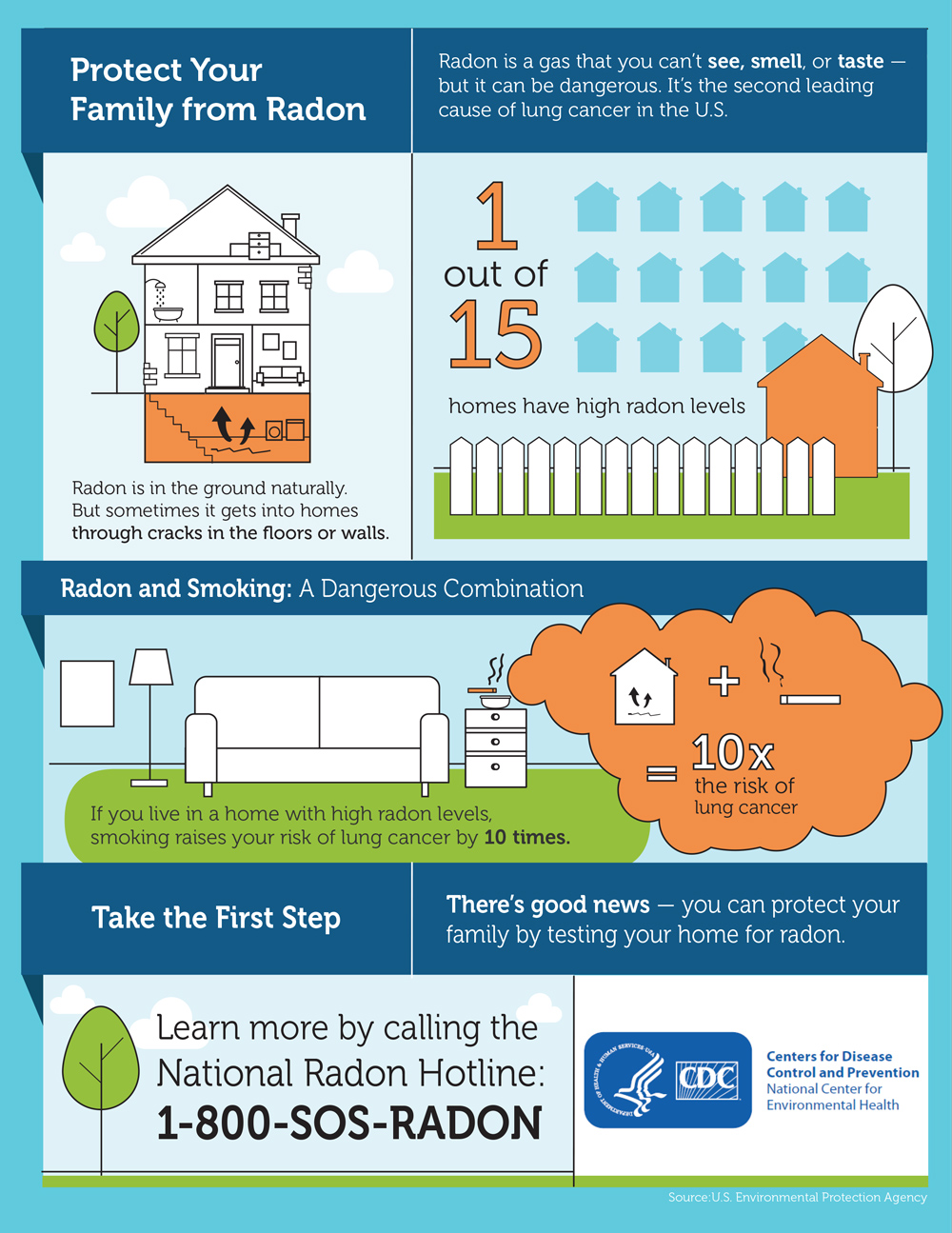
Protect Your Family from Radon – Centers for Disease Control Infographic.
Radon decays into radioactive particles that can be trapped in the lungs when inhaled. These particles release small bursts of energy that damage lung tissue and may lead to lung cancer. Radon is the second leading cause of lung cancer in the United States. Only smoking causes more lung-cancer deaths, and smoking combined with radon is a particularly serious health risk. Chances of getting lung cancer are higher from the combination of smoking and radon than from either source alone. Not everyone who is exposed to radon develops the disease, but the chances increase with increasing levels of radon and exposure time. It may take many years for lung cancer to develop. Currently, 15,600 to 19,300 radon-induced lung cancer deaths per year are estimated in the U.S. There is no safe level of exposure to radon.
In the United States, the U.S. Environmental Protection Agency (EPA) recommends building owners mitigate indoor radon gas concentrations greater than or equal to (≥) 4.0 picocuries per liter of air (pCi/L). However, the World Health Organization recommends mitigation for indoor concentrations ≥2.7 pCi/L, based on 13 European case-controlled studies of >21,000 participants that showed a significant 8 percent increase in lung cancer per 2.7 pCi/L radon concentration increase. As there is no known threshold concentration below which radon exposure presents no risk, radon mitigation should be seriously considered whenever radon is detected or there is a potential geologic source for radon and always mitigated if indoor radon concentrations are ≥2.7 pCi/L.
How Do I Test for Radon?
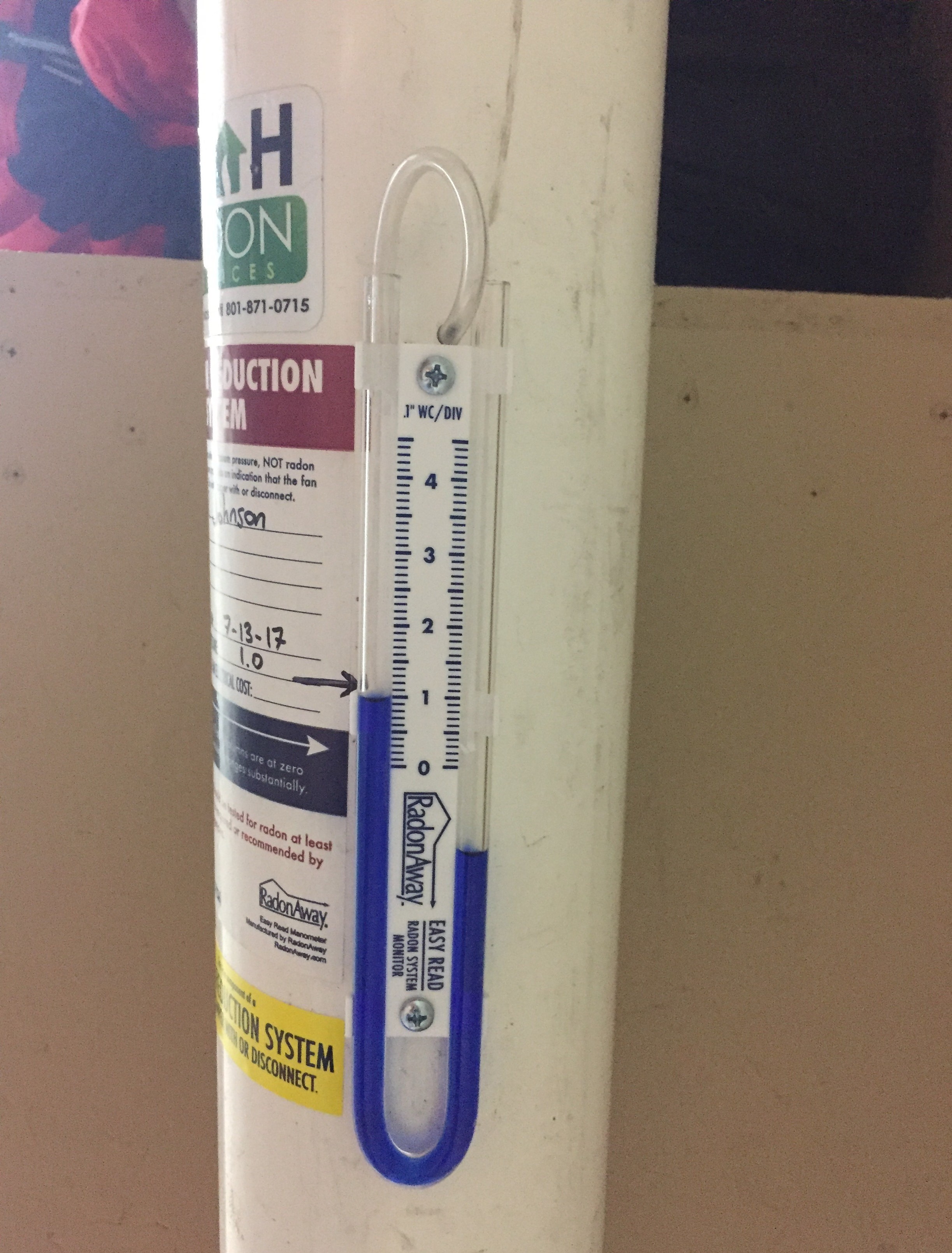
Typical Residential Radon Gas Remediation System Manometer
There are two general ways to test for radon: short-term and long-term testing. The EPA recommends a short-term test first and, if high levels of radon are found (> 4 pCi/L), follow up with either a long-term or a second short-term test. Low-cost, do-it-yourself radon test kits are available through the mail and in retail outlets, or you can hire a trained contractor. Make sure any contractors are licensed by the State of Utah and that they are certified by either the National Radon Proficiency Program or the National Radon Safety Board.
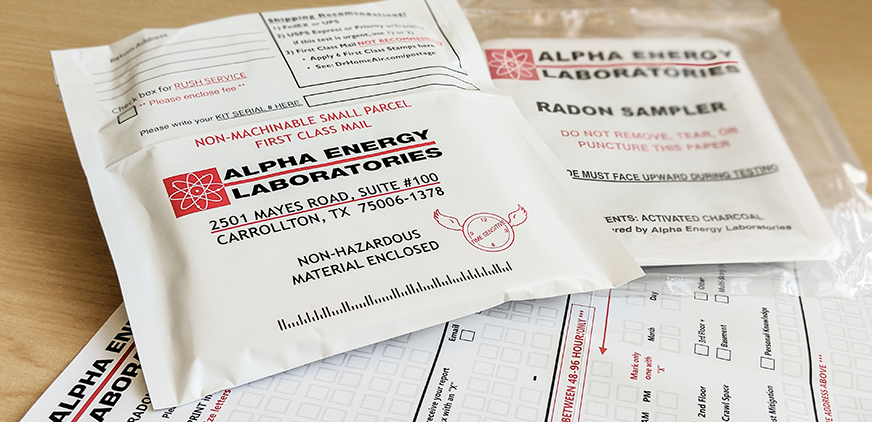
Radon test kits.
Short-term testing typically takes from two to 90 days and commonly includes charcoal canisters, alpha track, electric ion chambers, continuous monitors, and charcoal liquid scintillation detectors. Because radon levels tend to vary from day to day and season to season, a short-term test is less likely than a long-term test to indicate your year-round average radon level. If results are needed quickly, a short-term test followed by a second short-term test may be used to decide whether to mitigate your home or building.
Long-term testing typically takes more than 90 days and includes alpha track and electric detectors. A long-term test will result in a reading that is more likely to represent the year-round average radon level than a short-term test.
What can I do if my home has high levels of radon?
The EPA suggests that occupants of homes with radon levels above 4 pCi/L take action to reduce indoor-radon concentrations through mitigation. Active air fans and sealed piping are commonly used, along with several other mitigation techniques. Typical costs for adopting radon-resistant construction measures are around $500 in the construction of a new residential home. Active radon mitigation systems installed in existing structures typically range from $1200 to $1700.
Radon Hazard Potential Maps
Radon-hazard potential in the Sandy-Draper Area, Salt Lake City, Utah
Public Information Series #18, 1993
Radon-hazard potential in the Provo-Orem Area, Utah County, Utah
Public Information Series #21, 1993
Radon-hazard potential in the St. George area, Washington County, Utah
Public Information Series #35, 1996
Radon-hazard potential in Ogden Valley, Weber County, Utah
Public Information Series #36, 1996
Radon-hazard potential in western Salt Lake Valley, Salt Lake County, Utah
Public Information Series #43
Radon-hazard potential in Tooele Valley, Tooele County, Utah
Public Information Series #44
Radon-hazard potential in the lower Weber River area, Weber and Davis Counties, Utah
Public Information Series #45
