
I am thinking of buying a house at “X” address… is it near a fault?
By Sandy Eldredge

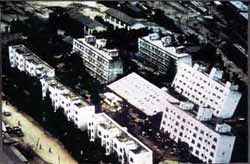
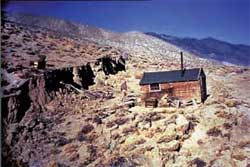
We receive this inquiry often and are glad that these inquiries have been on the rise, as they reflect increased awareness of the earthquake threat in Utah.
Many people associate main earthquake damage with nearness to a fault. Although fault proximity is a major concern, strong ground shaking and other earthquake hazards are more widespread and can cause damage over large areas many miles from the fault.
In addition, fault rupture at the ground surface is expected only in large (magnitude 6.5 and greater) earthquakes, which are less frequent than moderate earthquakes that may still cause extensive damage from ground shaking.
Therefore, we often surprise the inquirer with more information than they probably expected. Earthquake risk to any particular home depends on what and where the earthquake hazards are, as well as when and how the house was constructed.
What are the main earthquake hazards?
Ground shaking:
- is the most damaging and widespread earthquake hazard,
- can occur almost anywhere and is difficult to avoid (but house retro-fits can minimize damage),
- induces most of the other earthquake hazards, and
- can cause damage to houses in earthquakes as small as magnitude 5.0, which on average occur once every four years somewhere in Utah and once every 10 years in the Wasatch Front region (most recent event was the 1992 magnitude 5.8 St. George earthquake).
Ground shaking from the 1934 magnitude 6.6 Hansel Valley (north end of Great Salt Lake) earthquake damaged structures 80 miles away in Salt Lake City.
Soil liquefaction:
- is caused by ground shaking in areas with sandy soil and shallow ground water,
- means that the soil liquefies and acts more like a fluid than a solid,
- can cause a house to settle, crack, or tip,
- is most likely to occur near streams and other bodies of water, and
- can occur in earthquakes of about magnitude 5.0 and greater.
Slope failure (landslides and rock falls):
- can occur on unstable slopes within a few miles of a magnitude 4.0 earthquake, which on average occur once every year in Utah,
- can occur more than 100 miles from a magnitude 7.5 earthquake, and
- is expected in mountain and canyon areas and valley slopes having susceptible rock/soil types.
Surface fault rupture:
- occurs during large earthquakes of about magnitude 6.5 and greater, which on average occur once every 50-120 years somewhere in Utah and once every 300-400 years on the Wasatch fault in the urban Wasatch Front area (last large earthquake in Utah was in 1934, magnitude 6.6, at the north end of Great Salt Lake; last large earthquake on the Wasatch fault in the urban area was approximately 500 years ago),
- typically offsets the ground surface vertically on each side of the fault, forming fault scarps (steep breaks in slope) that can be over 10 feet high,
- causes the mountain side of the fault to rise and the valley side to drop,
- may deform the ground surface for hundreds of feet from the fault, chiefly on the valley side of the fault, and
- causes tectonic subsidence, which is the broad, permanent tilting of the valley floor down toward the fault scarp.
Flooding:
- from dam failure would cause the greatest damage,
- from stream or canal blockage or diversion could cause major damage, and
- from tectonic subsidence could happen in several ways. A large earthquake on the Wasatch fault could cause subsidence as far as 10 miles from the fault, and Great Salt Lake or Utah Lake may flood eastern shoreline areas. Subsidence could also cause the ponding of water in areas with a shallow ground-water table. In addition, tilting of the ground surface could compromise gravity-flow structures such as canals or sewer lines.
What should I consider before buying a house?
- What earthquake hazards are present (hazard maps are available for inspection at most Wasatch Front county planning departments and at the UGS).
- How frequently each type of hazard occurs.
- What effects each hazard may have on a house.
- House construction—for example, year built and type of material. Houses constructed before 1975 are not built to today’s earthquake building codes, but they can be retrofitted to make them more resistant to ground shaking. In general, unreinforced brick or masonry houses are more susceptible to damage than wood-frame houses.
- What options are available for minimizing damage. Many retrofit procedures are relatively inexpensive and often can be performed by the experienced do-it-yourself homeowner (see the Utah Division of State History web page listed below).
For more information, visit the following websites:
Geologic Hazards in Utah: A Guide for Homebuyers & Real-Estate Agents
Homebuyer’s Guide to Earthquake Hazards in Utah (pdf)
Geologic Hazards Maps in Wasatch Front Counties
Putting down roots in earthquake country – your handbook for earthquakes in Utah, Utah Seismic Safety Commission (pdf)
Bracing for the Big One for seismic retrofitting of historic houses (Utah Division of State History).
General Preparedness Information (Be Ready Utah).
University of Utah Seismograph Stations for earthquake events in Utah.
Survey Notes, v. 39 no. 2, May 2007
